
KEY POINTS
- Local fish production growth rose to 1.4 million metric tons this year.
- Nigeria plans single-digit loans to accelerate local fish production growth.
- The marine economy is emerging as an oil alternative.
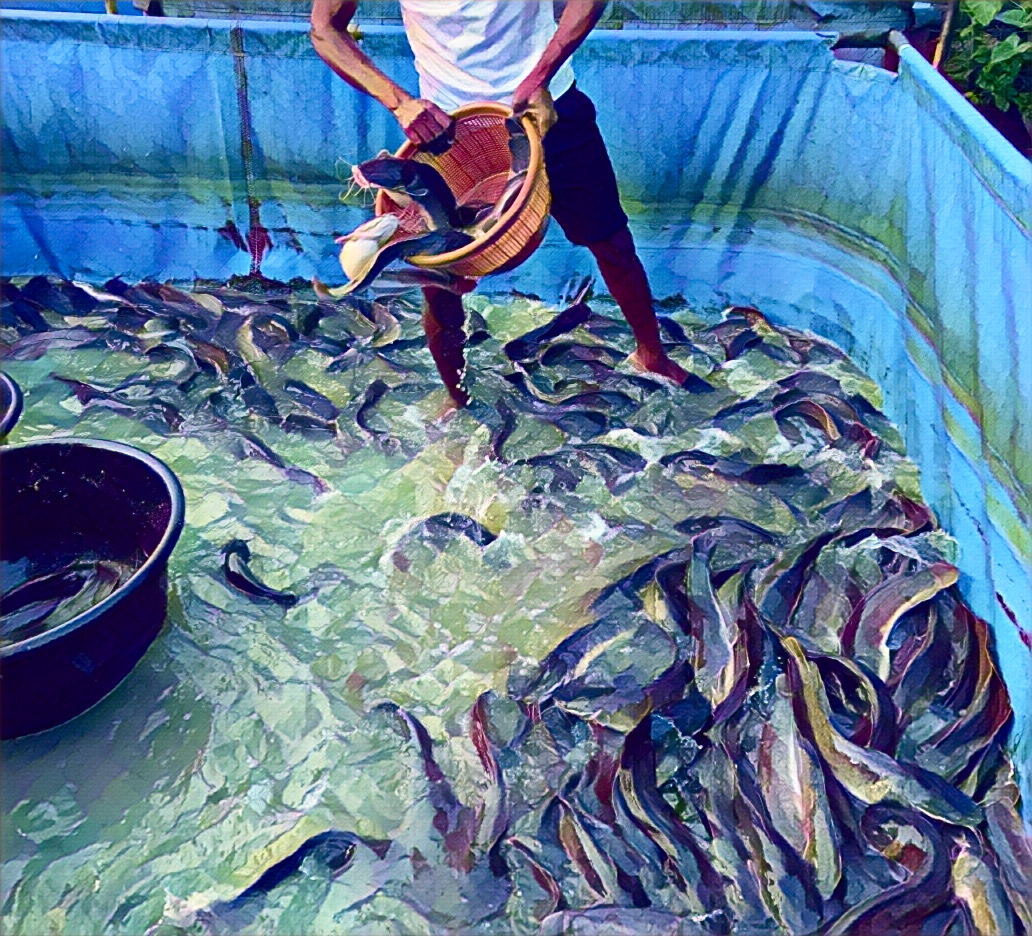
Nigeria’s local fish production has climbed to 1.4 million metric tons this year, up from 1.1 million, as the Federal Government intensifies efforts to boost domestic supply, cut imports and strengthen food security, the Minister of Marine and Blue Economy, Adegboyega Oyetola, said.
Oyetola disclosed the figures on Wednesday in Abuja at the Ministry’s 4th Quarter 2025 Citizens and Stakeholders’ Engagement Meeting, describing the growth as early evidence that reforms in the fisheries and aquaculture subsector are gaining traction.
He said targeted government interventions drove the gains by expanding local capacity, improving coordination among agencies, deploying appropriate technologies and strengthening sectoral planning.
Local fish production growth gathers momentum
“In fisheries and aquaculture, we are working deliberately to boost local fish production, reduce dependence on imports and strengthen food security,” Oyetola said. “I am pleased to report that local fish production has increased from 1.1 million metric tons to 1.4 million metric tons so far this year.”
While acknowledging that output still falls short of Nigeria’s estimated annual fish consumption of 3.6 million metric tons, the minister said the progress points to a clear pathway toward self-sufficiency. He also described the subsector as central to economic diversification, job creation and food resilience under President Bola Ahmed Tinubu’s Renewed Hope Agenda.
Furthermore to accelerate local fish production growth, Oyetola said the ministry has begun discussions with financial institutions to provide single-digit interest loans to fish farmers nationwide. The financing initiative is expected to improve access to affordable capital for artisanal and industrial operators, raise productivity and support efforts to curb illegal, unreported and unregulated fishing.
Local fish production growth draws investors
Also speaking at the meeting, Executive Secretary of the Nigerian Shippers’ Council, Pius Akutah, said the engagement reflected consistency in implementing the administration’s reform agenda across the marine and blue economy.
He also said the meeting’s theme, positioning Nigeria’s marine and blue economy for investment, innovation and expansion, underscored government efforts to move the sector beyond policy adoption toward measurable outcomes. Akutah described the participation of the Infrastructure Concession Regulatory Commission as a strategic push to deepen public-private partnerships critical to attracting long-term investment.
Therefore as the year winds down, Akutah said stakeholders are increasingly viewing the marine and blue economy as a viable alternative to Nigeria’s heavy reliance on oil revenues. He cited improved performance indicators at the Nigerian Ports Authority and Nigeria’s readmission into the global maritime community as signs of renewed confidence in the sector.
Akutah said the developments reflect growing preparedness within the ministry for stronger results in the coming year.