
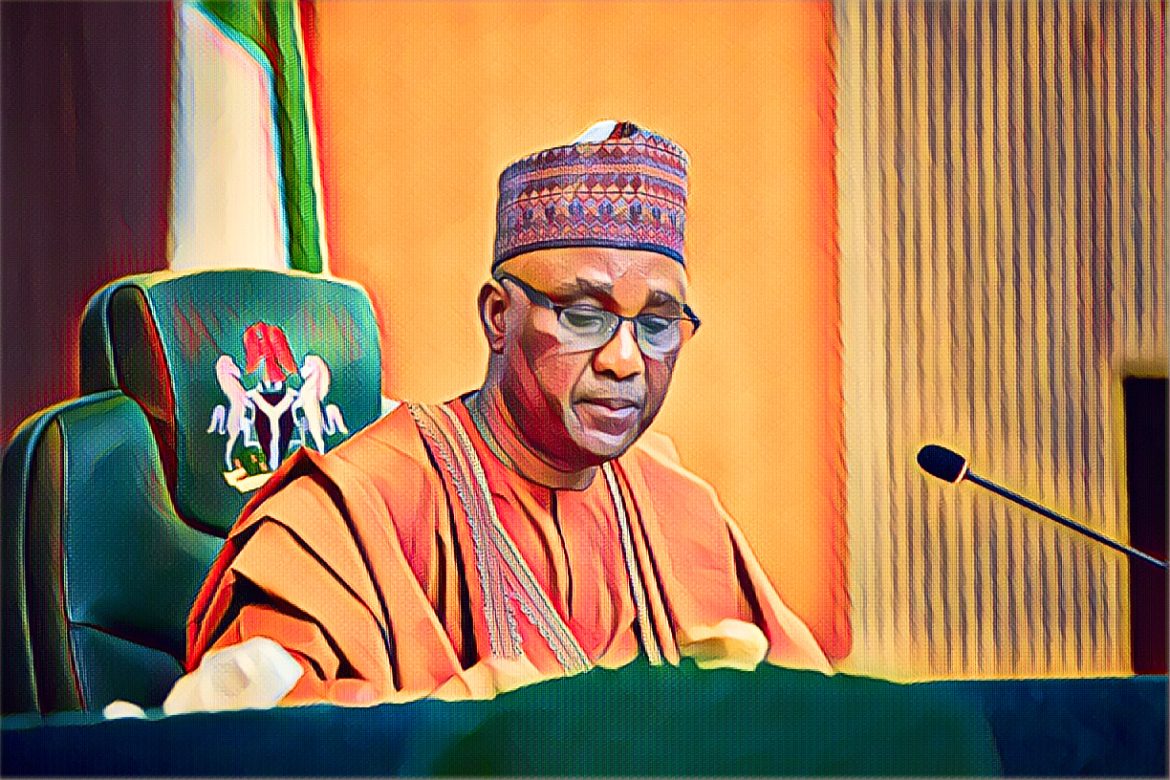
In a pointed address that set the tone for the upcoming legislative scrutiny, the Speaker of Nigeria’s House of Representatives, Rt. Hon. Tajudeen Abbas, has issued a clear caution to the executive branch, urging that the newly proposed 2026 budget must be anchored in “credible targets and realistic assumptions.”
The warning came during a joint session of the National Assembly on Friday, immediately after President Bola Tinubu presented the record ₦58.47 trillion appropriation bill titled “Budget of Consolidation, Renewed Resilience and Shared Prosperity.”
Speaker Abbas, while expressing optimism, underscored the critical lessons from recent fiscal years. He stated that the legislature receives the bill “with confidence that the lessons of 2025 have been fully internalised,” but emphasized that “growth must increasingly translate into jobs, higher incomes, and expanded opportunity.”
His remarks directly responded to the budget’s ambitious macroeconomic assumptions, including an oil price benchmark of $64.85 per barrel, daily oil production of 1.84 million barrels, and an exchange rate of ₦1,400 per US dollar. “Fiscal discipline must continue to deliver fairness, efficiency, and visible impact,” Abbas asserted, framing 2026 as a promised “year of fulfilment” following a “year of adjustment and learning.”
A Call for Prudence Amidst Overlapping Budgets and Economic Pressure
The Speaker’s call for realism is not theoretical but is grounded in the government’s well-documented struggles with budget implementation. A significant challenge has been the concurrent operation of multiple annual budgets, a practice that blurs fiscal lines and complicates accountability.
President Tinubu himself has had to request the repeal and re-enactment of both the 2024 and 2025 budgets, seeking an extension for the 2025 budget’s implementation through March 2026 to achieve alignment. This backdrop of overlapping appropriations has weakened public confidence and highlighted systemic issues in fiscal planning and execution.
Economists and civil society organizations have long echoed the Speaker’s concerns. Nigeria’s economy, while showing modest GDP growth, continues to grapple with inflation rates in excess of 30%, a weakening currency, and rising debt servicing costs that consume a large portion of government revenue. Proposing a budget with aggressive revenue targets amidst these headwinds risks creating a deficit that could further increase borrowing.
Abbas’s warning touches the core of this dilemma: overly optimistic projections can lead to unsustainable deficits, unmet capital project targets, and a cycle of supplementary budgets that undermine the very discipline he championed. He assured Nigerians that the National Assembly would “scrutinise spending for accountability and ensure that every naira delivers value to citizens.”
The coming weeks will see intense debate in parliamentary committees as lawmakers dissect the budget’s line items. The executive’s ability to justify its assumptions and present a credible path to revenue generation will be critical.
The Speaker’s message positions the legislature not as a mere rubber stamp, but as an active guardian of the public treasury seeking tangible outcomes. “To Nigerians watching, the message of this budget is clear,” Abbas concluded. “Stability has been restored, confidence has been rebuilt, and the foundations for shared prosperity are firmly in place.” Whether the 2026 budget can translate this stated confidence into measurable improvement in the lives of citizens now forms the central question of its legislative journey.