
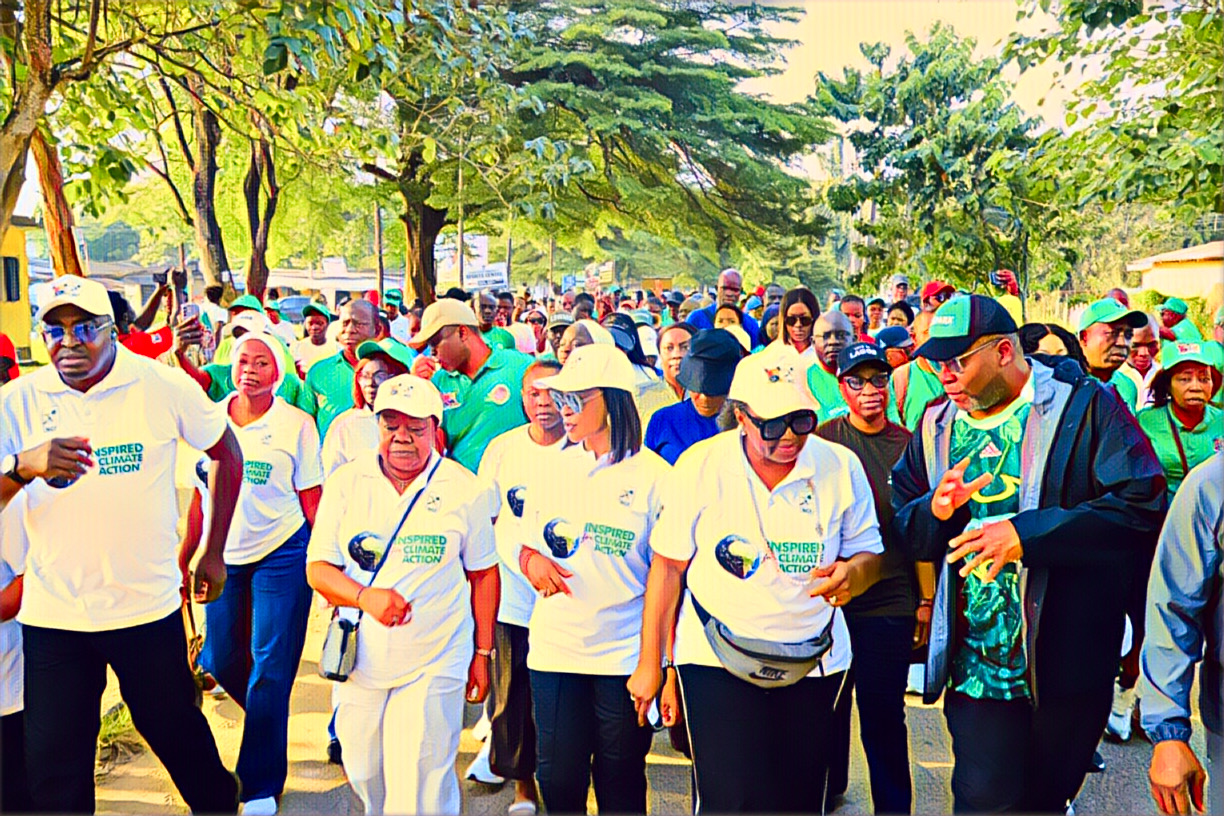
Lagos is enlisting university students in its fight against plastic waste and flooding. At the 20th Lagos Walk for Nature on Oct. 17, Gov. Babajide Sanwo-Olu urged students to separate waste, plant trees and hold both neighbors and government accountable.
The event drew more than 2,000 people to Lagos State University in Ojo. It was organized by the Nigerian Conservation Foundation and the state environment ministry, under the theme “Inspired for Climate Action.”
Waste, plastic and wetlands
Lagos generates about 13,000 metric tons of waste daily, roughly 15% of it plastic, Sanwo-Olu said. Plastic dumped into drains, canals and the lagoon blocks waterways and returns to neighborhoods as floodwater, he said. The state has restricted certain single-use plastics and suspended reclamation of wetlands, floodplains and lagoon fronts where required environmental impact assessments and drainage approvals were not obtained. “Development in Lagos must pass the test of drainage and environmental approval,” he said.
A call to students
Sanwo-Olu told students they would live longest with the results of today’s choices. He said the next two decades of the walk must deliver measurable results, not just awareness.
NCF council chairman Raliatu Adebiyi urged students of every discipline to plant trees, use less energy and manage waste responsibly. “When we protect nature, we protect people,” she said. Environmentalist Yeye Moremi Amosu urged participants to carry the message beyond the annual walk and into their families and communities. NCF also donated a giant recycling bin to LASU’s Centre for Environmental Studies and Sustainable Development.
The state has faced criticism over flooding. Environment Commissioner Tokunbo Wahab has accused some critics of politicizing the issue and says Lagos gets flash floods that recede within hours.
The reports reviewed gave no targets for waste reduction or drain clearing, so it is unclear how the state will measure the results Sanwo-Olu called for.