KEY POINTS
- The CBN and NNPC have signed an MoU to improve foreign exchange inflows and strengthen financing for Nigeria’s energy sector.
- The agreement will support the repatriation of oil and gas export proceeds, asset monetisation and efforts by NNPC to raise capital.
- Both institutions will establish joint committees to oversee implementation and monitor agreed performance targets.
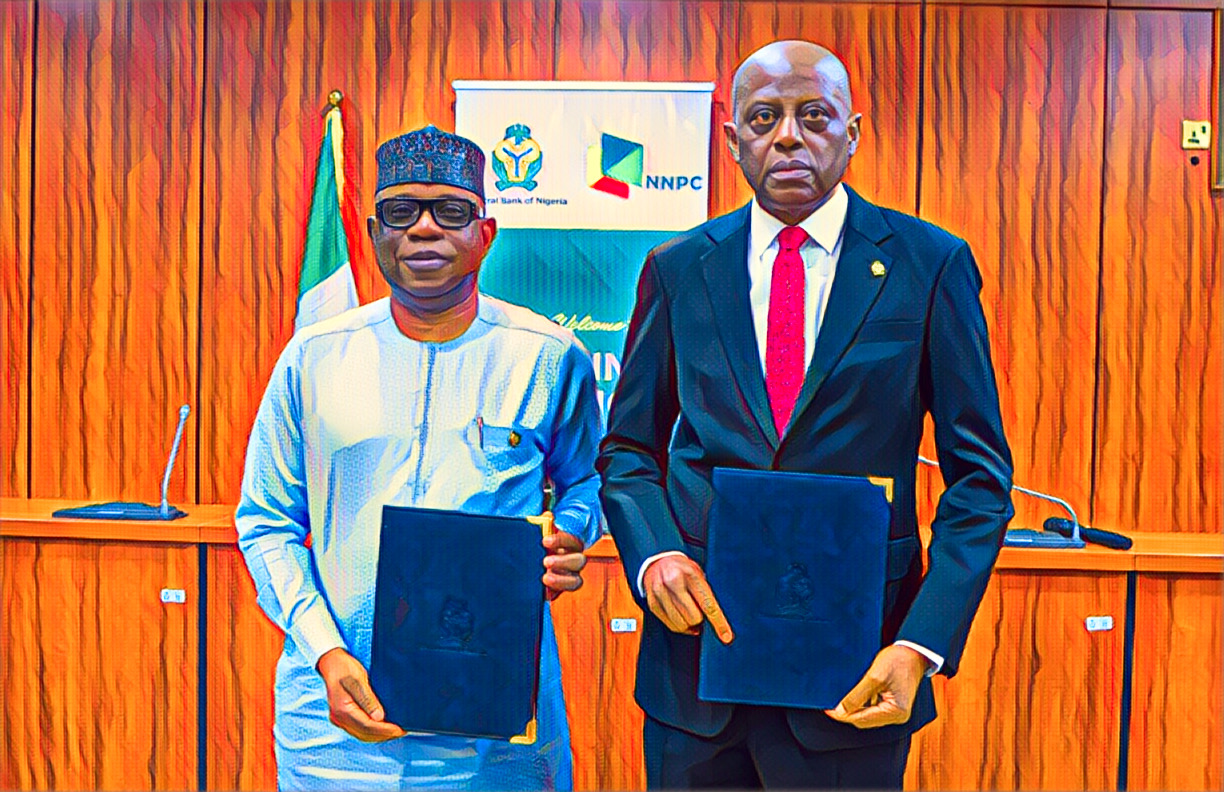
The Central Bank of Nigeria (CBN) and the Nigerian National Petroleum Company Limited (NNPC) have signed a Memorandum of Understanding (MoU) aimed at improving foreign exchange inflows, strengthening energy financing and expanding cooperation between Nigeria’s financial and energy sectors.
The agreement was signed in Abuja on Wednesday, November 18, 2026, by representatives of both institutions.
Speaking at the ceremony, CBN Governor Olayemi Cardoso said the partnership would support better macroeconomic management, promote economic growth and strengthen Nigeria’s financial stability.
He described the oil and gas industry as a major contributor to the country’s foreign exchange earnings, external reserves and government revenue. He also stressed that NNPC’s operations played an important role in generating economic activity.
Cardoso explained that the CBN, as custodian of key operational foreign currency accounts belonging to NNPC, was responsible for ensuring that proceeds from oil and gas operations were transferred securely and promptly into the Federation Account and other designated government accounts.
He said improving account management, fund transfers and liquidity support would help ensure more predictable foreign exchange inflows and strengthen the government’s ability to meet its financial obligations.
Partnership to support gas sector financing
The CBN governor said the agreement would also create opportunities to attract international financial institutions to support the development of Nigeria’s gas industry.
He noted that the global transition towards cleaner energy sources was changing the way financial institutions approached energy investments. According to him, the CBN could use its influence within the financial system to bring international investors and lenders into Nigeria’s gas sector.
The MoU will cover several areas, including consultations, information sharing, oil and gas asset monetisation, operational approvals and automated payment systems.
It will also provide a framework for cooperation in digital innovation, cybersecurity, staff development, regulatory alignment, ethics and risk management.
Cardoso described the agreement as a formal arrangement that would strengthen the longstanding relationship between the two institutions and improve coordination between financial regulators and operators in the energy industry.
NNPC seeks better access to capital
NNPC Group Chief Executive Officer Bayo Ojulari said the agreement would provide a structured framework for cooperation between the national oil company and the country’s monetary authority.
He explained that Nigeria’s energy and financial sectors were closely connected because crude oil and natural gas remained major sources of foreign exchange earnings.
Ojulari said the Petroleum Industry Act (PIA) had repositioned NNPC as a commercial entity, making stronger institutional relationships necessary to support its operations.
He added that the company needed a more transparent and predictable working relationship with the CBN to improve its financial operations and expand its access to funding.
According to him, the agreement would help deepen trade, improve foreign exchange inflows and address challenges affecting the repatriation of export proceeds into Nigeria.
He said both institutions would also explore financial arrangements that would allow NNPC to raise capital using its balance sheet and assets.
The NNPC chief executive added that the CBN’s ability to bring financial institutions together would help the company identify new funding opportunities and develop financing structures for its energy projects.
Joint committees to monitor implementation
Ojulari said the agreement would also cover digital payments, technological innovation, cybersecurity, data protection, regulatory compliance and risk management.
To ensure that the partnership delivers results, both institutions will establish a joint steering committee and a working committee.
The committees will be co-chaired by representatives of the CBN and NNPC and will oversee the implementation of the agreement.
They will also monitor progress against agreed key performance indicators to assess whether both organisations are meeting their commitments.
The partnership is expected to strengthen the relationship between Nigeria’s monetary authority and national oil company, particularly in managing petroleum revenues, improving foreign exchange earnings and developing financing opportunities for the country’s energy industry.