
KEY POINTS
- Over 7,000 people from Alkaleri LGA, Bauchi State are sheltering at a Gombe primary school.
- Two children have died since the families arrived; measles cases have already emerged.
- UNICEF has distributed 600 hygiene kits and 56 cholera kits as sanitation conditions remain poor.
Eight-year-old Hafsat Adamu has never been to school. These days, she stands at the centre of small circles of children in a crowded displacement camp, carefully demonstrating how to wash hands. She has become a hygiene champion. She also has a sister still missing in the village she fled.
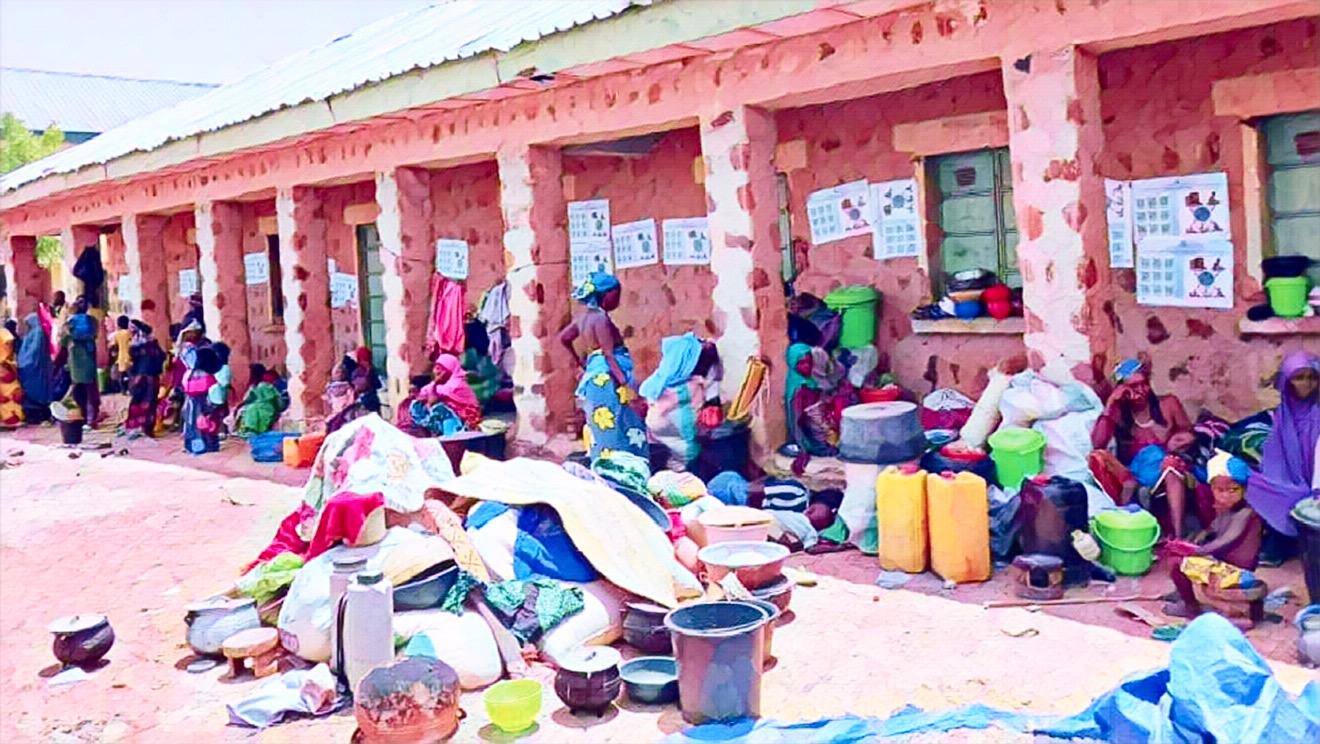
Hafsat is one of more than 7,000 people sheltering at the Central Primary School in Kashere, Akko Local Government Area of Gombe State, after bandit attacks drove their families from Jigare, Mansur, Yolo, and Gona communities in Alkaleri Local Government Area of Bauchi State. The school compound, which declared an emergency vacation for its regular students, now serves as a refugee settlement. Classrooms hold sleeping families. Verandas are lined with mats. Between 3,000 and 4,000 of the camp’s residents are children.
The first wave of displaced families arrived on February 24, 2026, according to Umar Badiko, Chairman of the Committee on IDPs at the camp. Since then the population has grown steadily, straining water, food, and sanitation resources designed for a fraction of the current number.
Bandit leader Gambo Kachalla named as driver of attacks
Displaced farmer Zaradeen Abdullahi, who fled Mansur with one of his wives and five children, described how a bandit leader known as Gambo Kachalla orchestrated the violence that emptied the communities. Kachalla had reportedly been arrested in Nasarawa State but returned home and resumed control of his fighters. Attempts by local officials to negotiate peace failed. Kachalla’s followers continued cattle rustling, killings, and intimidation, and when security officials tried to intervene, Kachalla’s brother Auta reportedly threatened to kill the village head’s family unless they withdrew.
“Gambo failed to control his followers, they continued to spread fear and terror in the community,” Abdullahi said. Shortly after that threat, the attacks escalated and families ran.
Twenty-year-old Amina Isa, a mother of three including a three month old baby, said she had just returned from the market when the assault began. “We saw people running, and my husband and I ran with them,” she said. She arrived at the camp with nothing.
Disease risk rising, children unvaccinated
Two children have died since the families arrived at the Bauchi IDP camp Gombe site. Badiko confirmed that measles cases have already appeared among the camp’s youngest residents. Dr Nuzhat Rafique, UNICEF Chief of Field Office for Bauchi, visited the camp and said her agency was working with both Bauchi and Gombe state governments to address the emergency. UNICEF has distributed 600 hygiene and dignity kits and 56 household cholera kits. Health workers also discovered that many children in the camp had never received any vaccinations and launched immunisation drives to cover them.
The Gombe State Primary Health Care Development Agency has set up a multi-sectoral committee to coordinate relief and established free treatment at a primary healthcare centre across the road from the camp. As of the visit, 300 children had received routine immunisation and 33 previously unvaccinated children had received first doses.
Sanitation remains a serious concern. The camp has approximately 20 toilets serving thousands of people, and open defecation was widespread when families first arrived. The state government has approved N500 million in counterpart funding for ready-to-use therapeutic foods to address malnutrition among children, with supplies expected soon. Authorities are also planning to relocate families to renovated hostels at a secondary school on Billiri Road once construction is complete.