
KEY POINTS
- ImpactHER Africa founder Efe Ukala urged African women entrepreneurs to capture more of the $5 trillion global green economy.
- Ukala said certification gaps and regulatory compliance keep most women in informal trade despite running sustainable businesses.
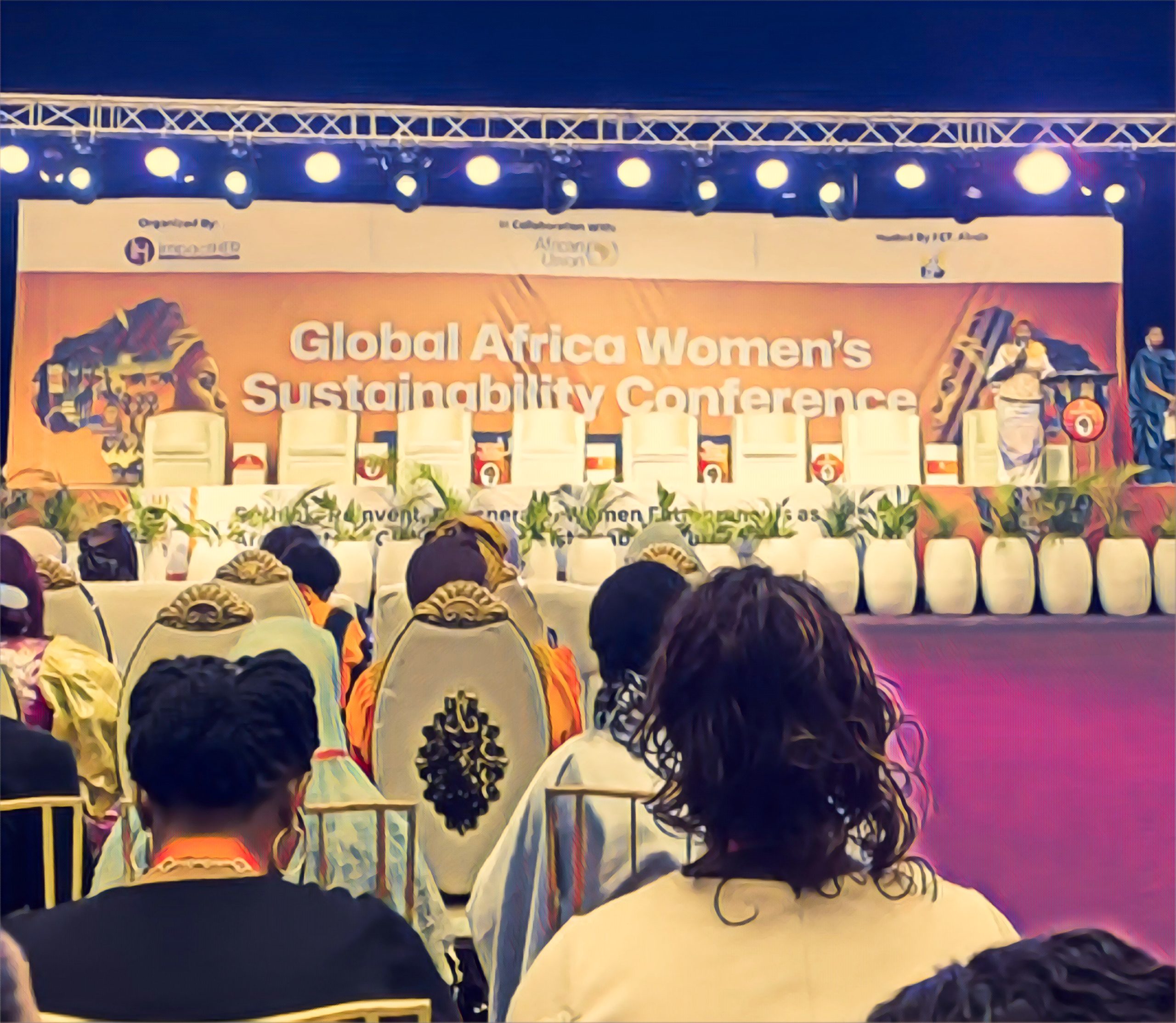
- More than 5,000 female entrepreneurs from 58 countries attended the Global African Women Sustainability Conference in Abuja.
Efe Ukala, founder of ImpactHER Africa, on Friday urged African women entrepreneurs to claim a bigger share of the $5 trillion global green economy, arguing that the continent’s women already farm regeneratively, build with waste and power villages with solar, but lack the certifications to monetize that work in international markets.
Speaking at the second Global African Women Sustainability Conference in Abuja, Ukala framed the question of access as one of paperwork and proof, not capacity. The summit drew more than 5,000 female entrepreneurs from 58 countries.
Now her call lands as global demand for sustainably produced goods accelerates, with consumers paying premiums and corporate buyers chasing traceable supply chains across food, fashion and energy.
A $5 trillion target
Specifically, Ukala said the global green economy is now worth more than $5 trillion a year and is on track to reach $7 trillion by 2030, growing at twice the pace of conventional industries. She argued that African women already operate at the heart of that opportunity, even if international ledgers do not yet record their work.
“The global African women who already farm regeneratively, build with waste, weave with eco-dyes and power villages with the sun should be a part of the market and not outside it,” Ukala said.
Indeed, she pointed to two market signals: consumers willing to pay nearly 10 percent more for sustainably produced goods, and African women conducting an estimated 70 percent of informal cross-border trade on the continent.
Moreover, Ukala said the gap between practice and proof leaves African women trapped in informal trade. Her diagnosis pulled directly from UN Women research that flags compliance with regulations, safety and quality standards as the main barrier.
“Our women have the products. They do not have the paperwork, and have the practice and do not have the proof, while they have sustainability but they do not have the certificate that lets the world see it,” Ukala said.
Today, she added, conference sessions tackled the gap directly, covering sustainable business foundations, certifications, standards and startup regulations. Additionally, Ukala said African women deserve ISO certifications, export licenses and direct lines to global buyers.
Continental coalition
Furthermore, the summit drew political weight. More than 10 African ministers, representatives of 20 African governments, United States mayoral officials and delegations from Latin America and the Caribbean attended, alongside officials from the African Development Bank, the United Nations Conference on Trade and Development and the African Export-Import Bank.
Meanwhile, ministers and government representatives from Nigeria, Chad, Uganda, Zimbabwe, The Gambia, Sierra Leone, Ivory Coast, Zambia and Gabon pledged to strengthen support and access for women entrepreneurs in their respective countries.
Together, those commitments give the conference an institutional spine to chase deliverables, although delivery has historically lagged announcements at similar gatherings.
Sustainability as economic strategy
The conference theme, “Rethink, Reinvest, Reintegrate: Women Entrepreneurs As Architects of Global Africa’s Sustainable Future,” reflected a deliberate framing of sustainability as economic strategy rather than aid agenda. However, the certifications gap remains the choke point.
Notably, ISO and similar certifications cost time and capital that small producers rarely have, and standards bodies operating in Africa still process applications more slowly than peers in Europe or Asia.
Whether the Abuja summit translates into export licenses on actual products will determine whether ImpactHER’s pitch gains traction. Yet for now, Ukala’s message frames the green economy not as an aspiration, but as a market African women already supply, in everything but name.