
KEY POINTS
- A new VIISAUS data analysis says 19 swing states, not governors’ influence, will decide Nigeria’s 2027 presidential election.
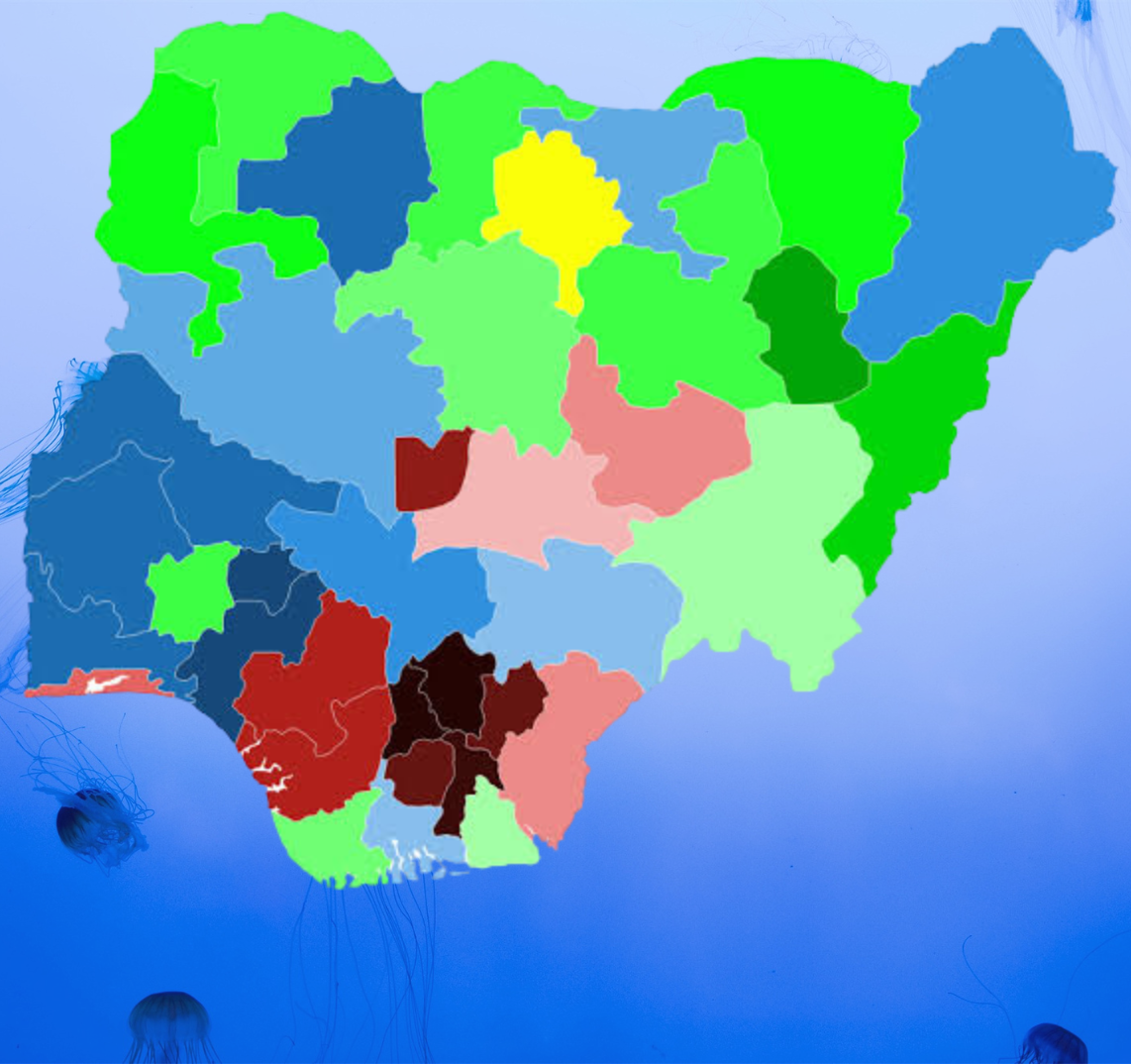
- The study classifies all 36 states into 11 consistent aligners, 19 swing states and six consistent non-aligners.
- Governors deliver presidential votes for their party only 57.8 percent of the time on average, the report found.
Nineteen swing states, not the much-discussed power of sitting governors, will decide Nigeria’s 2027 presidential election. That is the verdict of a new VIISAUS data report covering two decades of voting from 2003 to 2023.
The report concludes that Nigeria’s electoral map is more structurally defined than political rhetoric suggests. A decisive bloc of 19 swing states consistently shapes national outcomes, regardless of which governor sits in the state house.
How the data sorts the country
Specifically, the study classifies all 36 states into three behavioral categories based on how often each delivered presidential votes in line with its governor’s party: 11 consistent aligners, 19 swing states and six consistent non-aligners.
Notably, governors deliver for their party’s presidential candidate only 57.8 percent of the time on average. That figure masks significant regional variation and undercuts the assumption that incumbency power is enough to swing a national vote.
The 11 consistent aligner states have delivered for their governors’ parties in at least four of the last five presidential elections. They include Akwa Ibom, Bayelsa, Cross River and Delta in the South-South; Abia, Ebonyi and Enugu in the South-East; Ogun and Osun in the South-West; Taraba in the North-East; and Zamfara in the North-West.
Specifically, Akwa Ibom, Bayelsa and Taraba stand out with perfect five-out-of-five alignment records. The report calls these states the strongest historical base for any party heading into 2027.
The battleground that decides everything
Furthermore, the largest and most critical category is the 19 swing states that have alternated between aligning and not aligning. According to the report, these states have decided every presidential election.
The swing list spans every region. The North-Central includes all six of its states: Benue, Kogi, Kwara, Nasarawa, Niger and Plateau. The South-West contributes Ekiti, Lagos and Oyo. Rivers comes from the South-South and Imo from the South-East. The North-East brings Adamawa, Borno and Yobe, while the North-West includes Jigawa, Kaduna, Kano, Kebbi and Sokoto.
At the opposite end sit six consistent non-aligner states that rarely follow their governors’ parties: Anambra, Bauchi, Edo, Gombe, Katsina and Ondo.
Notably, Anambra is the most striking case, recording zero alignment across all five election cycles. The report attributes this to the dominance of a regional party without national presidential viability. Other states in this group have aligned only once in two decades.
What it means for 2027
The All Progressives Congress controls 31 of Nigeria’s 36 states, a commanding subnational footprint that many analysts say strengthens President Bola Tinubu’s prospects for re-election in 2027. However, the report’s finding cuts directly against that assumption.
Crucially, the data reveals sharp regional contrasts. The South-South is the most predictable zone, while the North-Central is uniformly competitive with all of its states sitting in the swing category. The South-West shows a mixed but evolving pattern.
The report cautions that the classification is not a prediction. It points to the 2023 election in the South-East as evidence that entrenched patterns can shift. However, it argues that long-term data remains the most reliable guide for political strategy.
With political alignments crystallizing ahead of 2027, the findings challenge conventional assumptions about how Nigerian campaigns win presidential elections. The data suggests that what happens in the swing states matters more than the party flag flying over the governor’s mansion. Any campaign that ignores that reality, the report concludes, will struggle to assemble a winning coalition.